The Door of Night
An homage to John Howe's Door of Night, which was the cover for various Tolkien books of which I am a fan. Thank you for the inspiration!
Originally started as a project for a class I took, I had to put this project on the side throughout many years, iterating over it slowly and redesigning it over time.
I decided to change the composition to emphasize the sense of scale and awe, focusing on the main fantasy elements while also guiding the eye towards Eärendil's ship. I diverged from the original description of the doors and took some liberties to give it a more modern look, while keeping its original spirit.
- Materials are mostly all procedural with Maya shading networks.
- Dragons were modeled in ZBrush, and scales were generated in Houdini and Redshift proxy instancing.
- Door lintel was generated with Houdini.
- The scene has ~200 lights total.
- The door's horns and sigil was modeled in ZBrush -- the sigil represents Arda Marred, or the broken earth. It was initially modeled as terrain and then sculpted on top.
- Close clouds were first iterated with WDAS' Moana cloud to define lookdev, and then modeled and generated in Houdini from scratch. Background clouds and sky are a combination of Noah Bradley's Sky reference picture pack, and the WDAS Moana Cloud that I left as easter egg.
Made with Maya, Redshift, Houdini, ZBrush, Substance Painter, comped with Photoshop.
I wanted to thank Bondi, Emily, Patrick and Val for all the feedback!
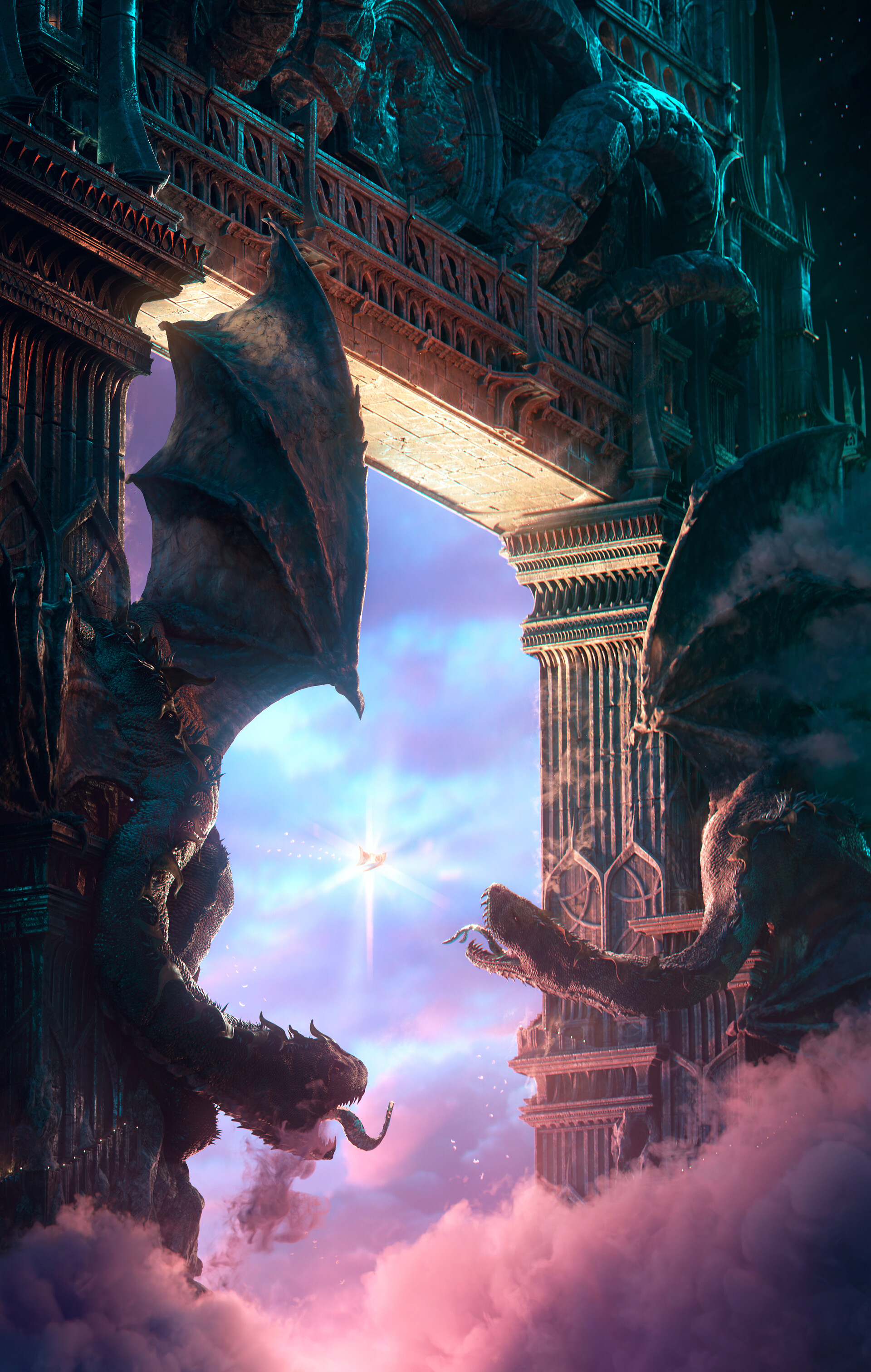
The Door of Night. Please see it in full screen!

Detail 1
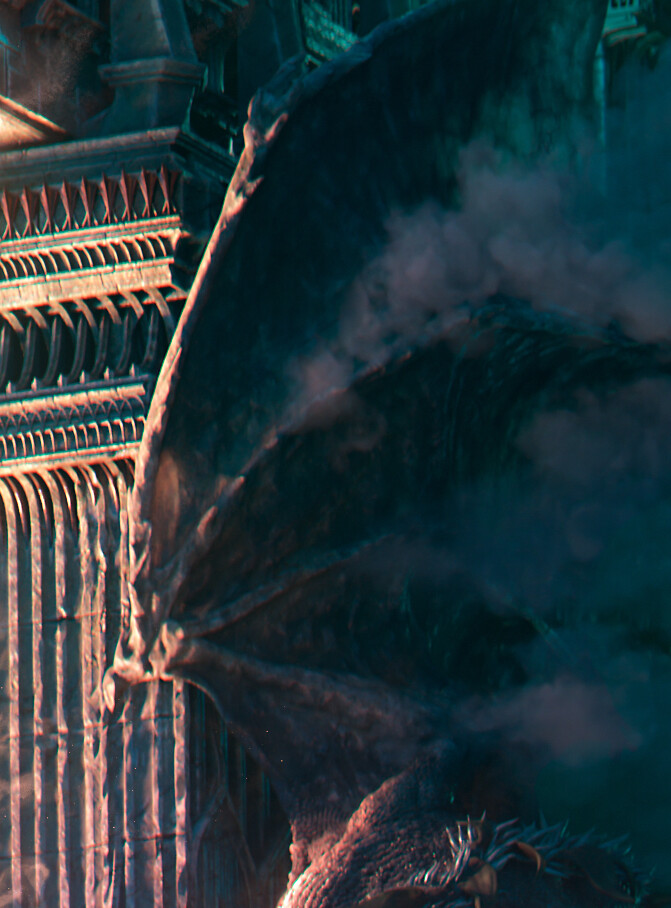
Detail 2
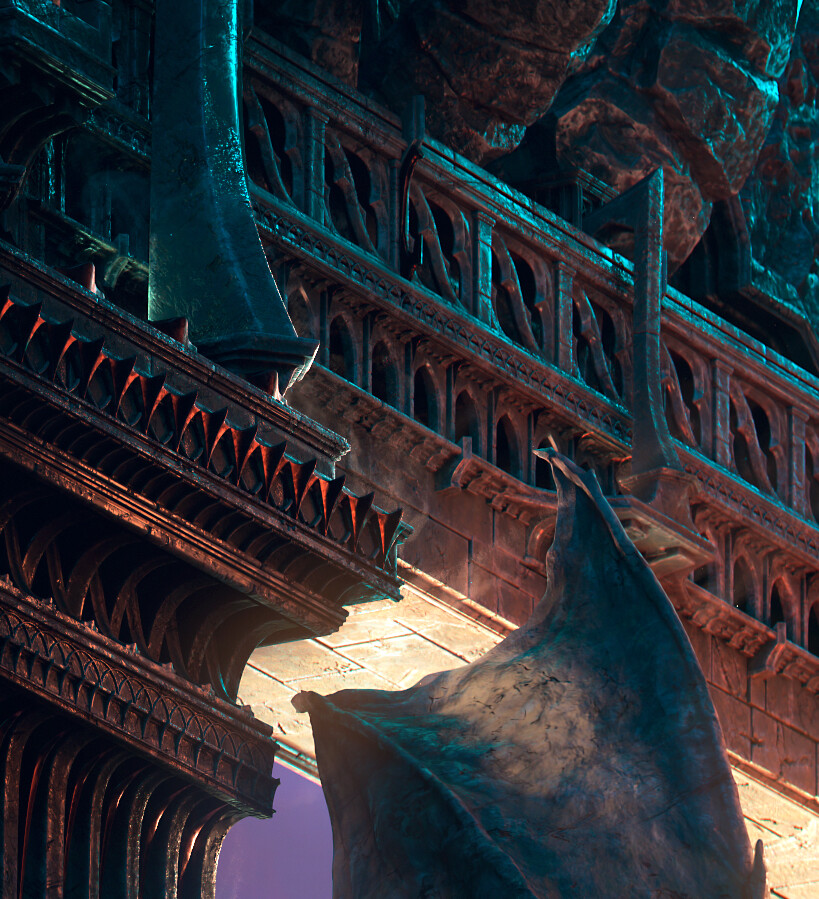
Detail 3

Detail 4
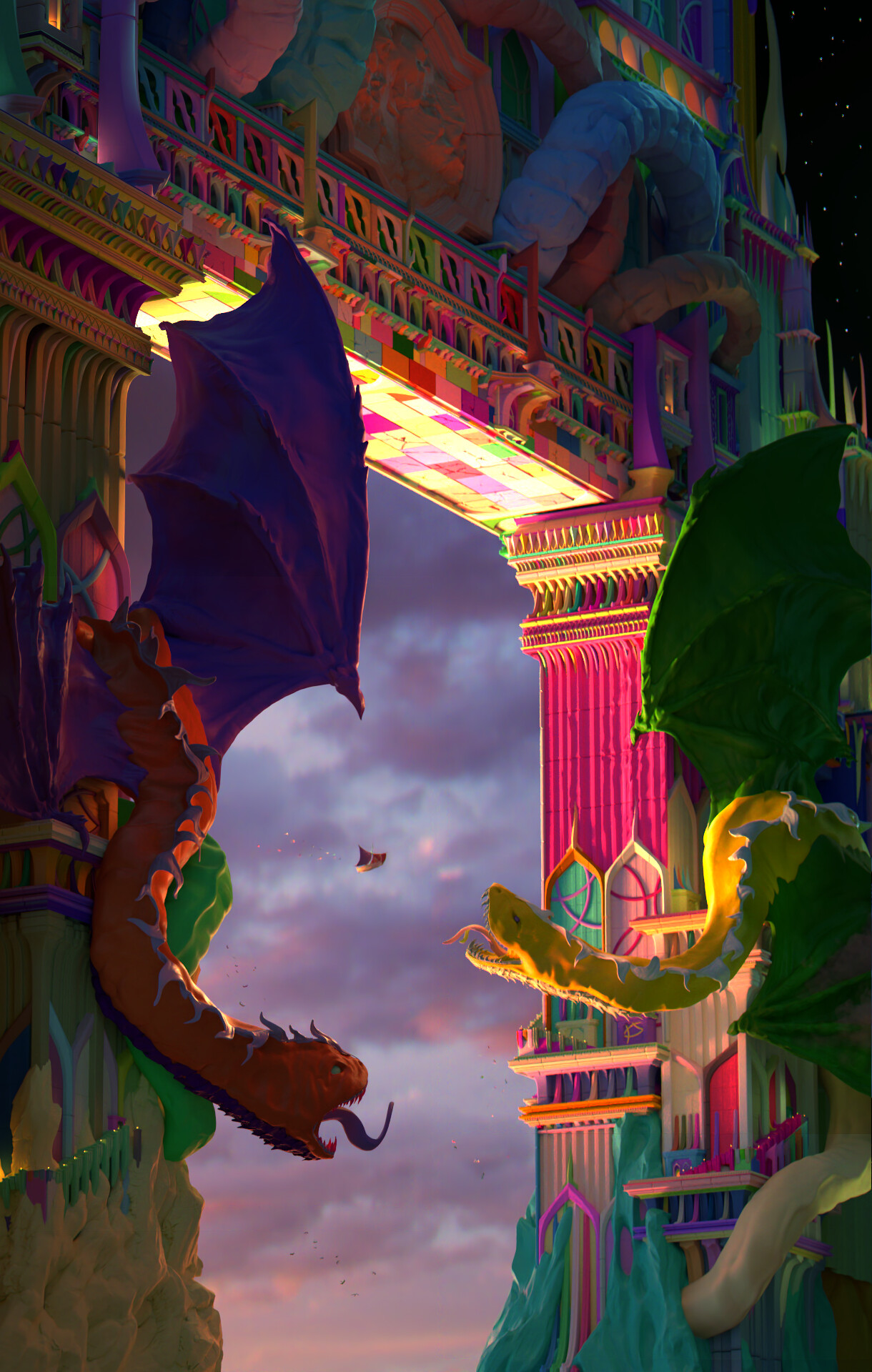
Object ID pass for fun :)

Are wireframes still a thing?
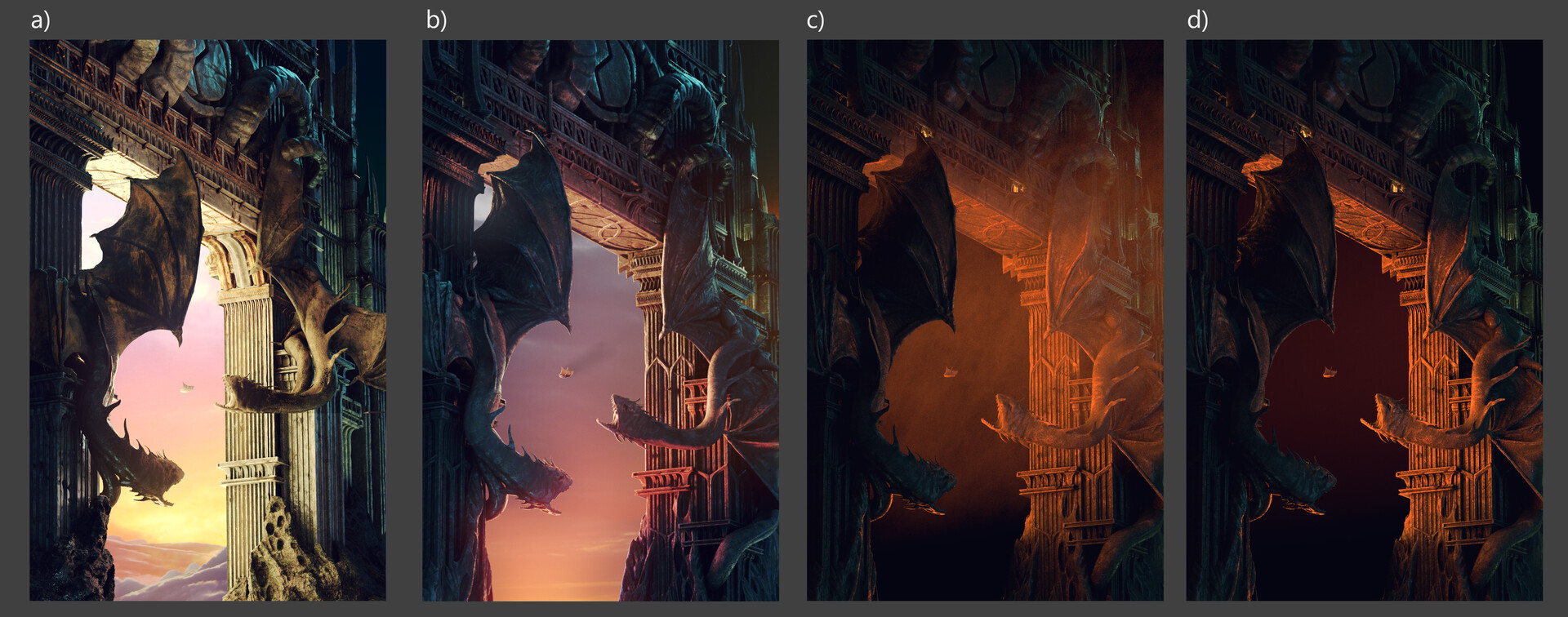
Various mood tests to see if it could be darker and grittier. Ended up going for the more high fantasy approach.
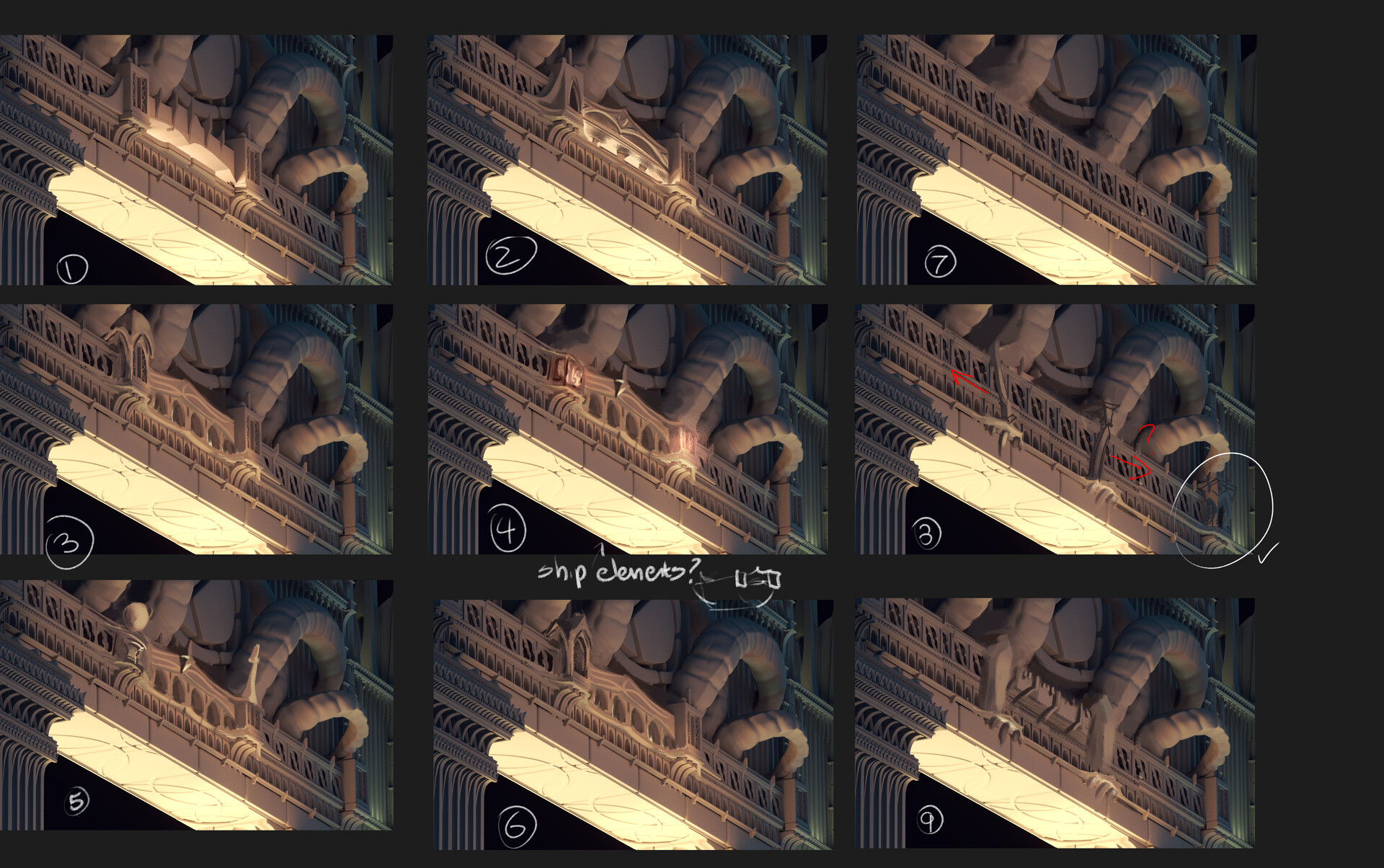
Paintover experiments to figure out door details.

I used many invisible blockers to sculpt the lighting.

200 lights were used in the scene to sculpt the look & feel.
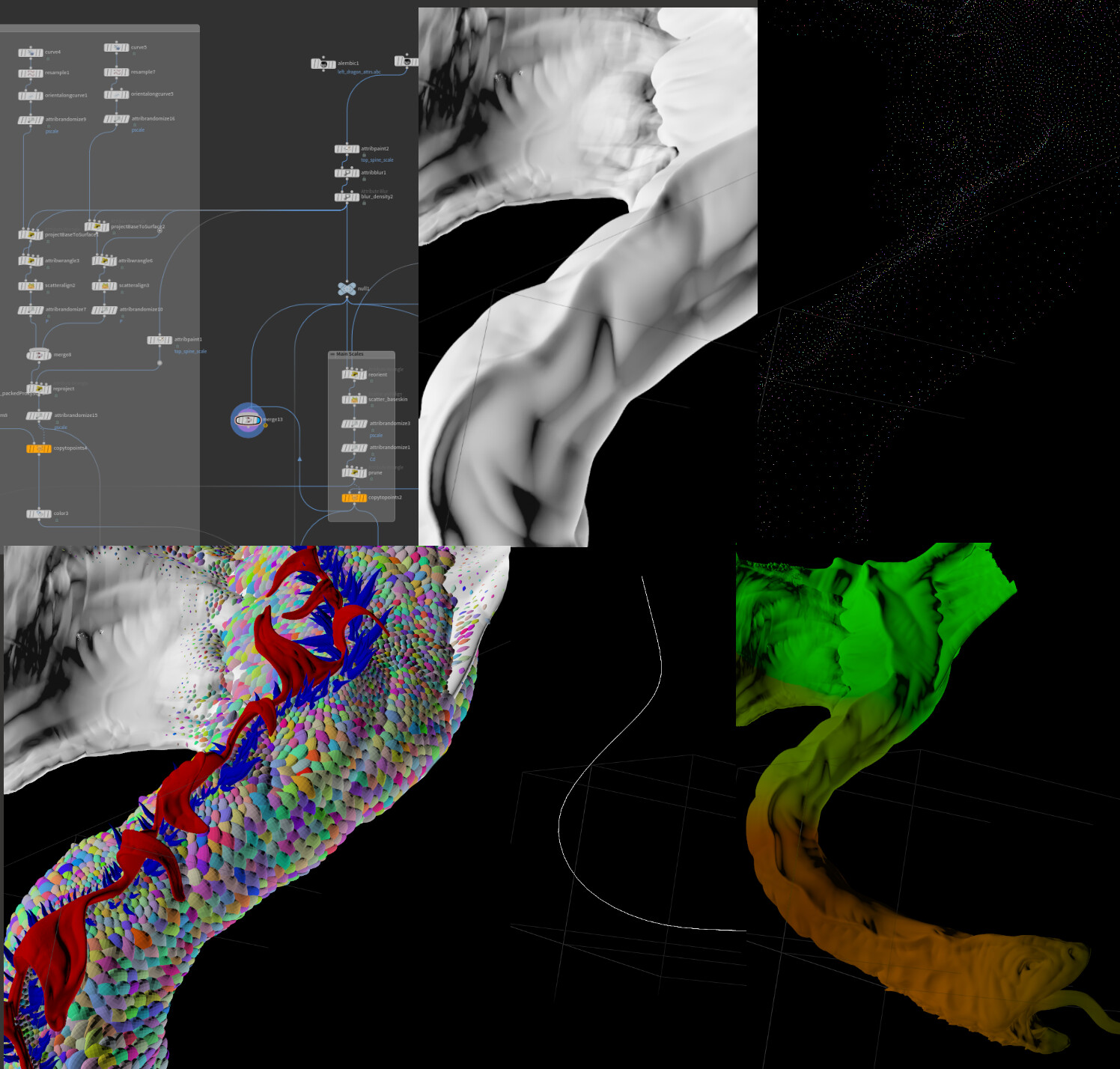
Dragon scales were implemented using Redshift instancing and Houdini scattering. A curve and VEX was used to orient the scales properly across both sides of the dragon.

Clouds were blocked in Maya and generated in Houdini

Dragon wing clouds used the same process as the main clouds, except using VEX and some curves to sculpt them their flow.

Door lintel was generated with VEX -- blocks were cracked procedurally.

Early rock lookdev.

Composition rework and iteration -- the key point was making the ship smaller to accentuate scale.

An early light study of the environment, to see how much light I'd have to tweak.

Early blockout viewport. It matched the reference, but had many issues.

Early blockout of the project -- lots of problems, and too many dragons!